
The Renewable Revolution Accelerates
By 2026, renewable energy tech is on track to power 50% of global electricity, delivering a staggering 70% reduction in carbon emissions from the power sector compared to 2020 levels. This isn’t a distant dream—it’s today’s reality, driven by unprecedented growth in 2025 when the world added 800 gigawatts (GW) of renewable capacity, a 16% increase over 2024 according to the International Energy Agency (IEA). Solar PV dominated with over 600 GW of new installations, while wind power surged by nearly 40% to reach 160 GW. What’s truly revolutionary is that low-emissions sources now contribute nearly 60% of global electricity demand growth, marking the first time renewables have outpaced all other energy sources in meeting rising demand.
This renewable energy revolution is transforming how we generate, store, and use energy across every sector of the global economy. From floating solar panels covering reservoirs to green hydrogen production facilities the size of small cities, these carbon-neutral innovations are no longer experimental—they’re scaling rapidly and delivering tangible climate benefits. China led the charge with nearly 500 GW of new renewable capacity, but growth was truly global, with India’s installations increasing by 60% and sub-Saharan Africa doubling its renewable capacity.
The technologies driving this transformation extend far beyond traditional solar and wind. Perovskite solar cells are shattering efficiency records, solid-state batteries are solving storage challenges, and next-generation geothermal systems are unlocking clean power in regions previously considered unsuitable. In this article, we’ll explore the eight game-changing renewable energy technologies that are accelerating our path to net-zero emissions. These aren’t just incremental improvements—they represent fundamental shifts in how we harness nature’s energy, with the potential to reshape global energy markets and dramatically reduce our carbon footprint within this decade.
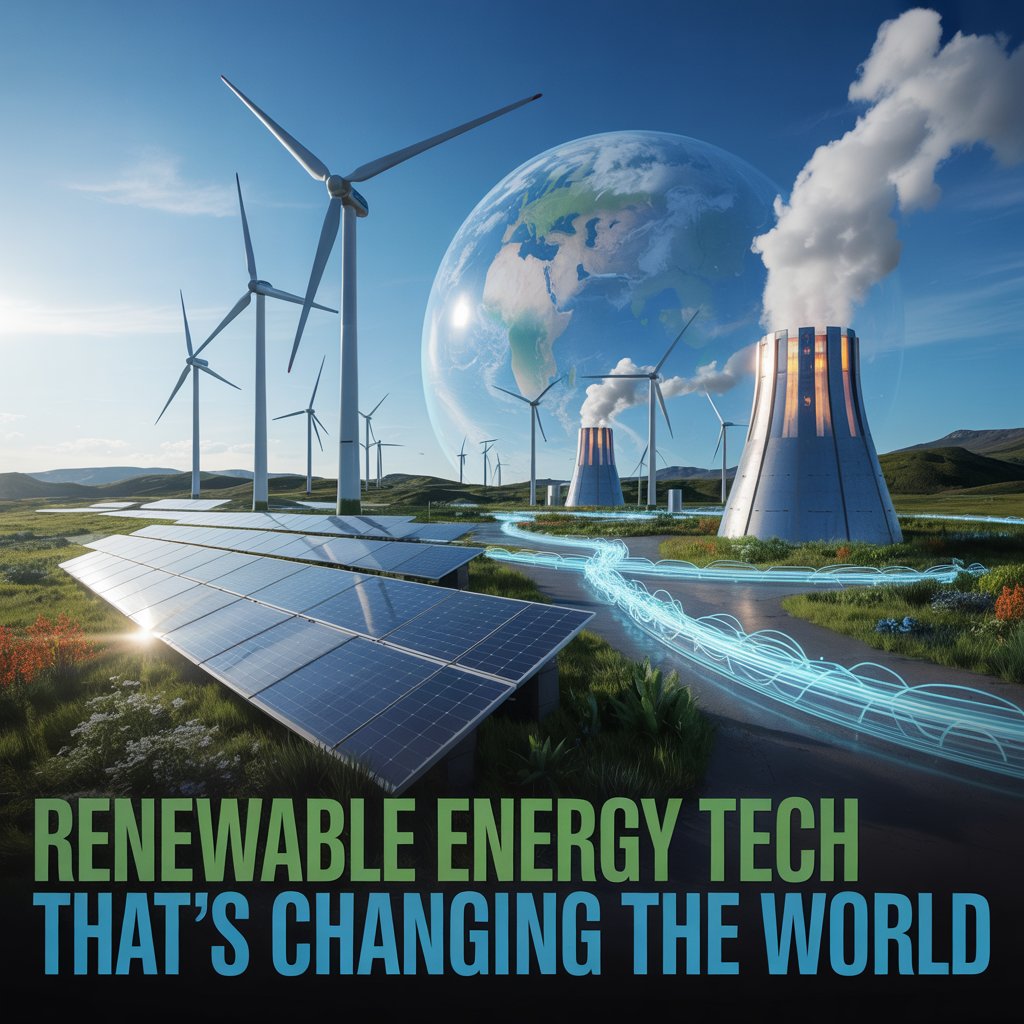
The Rise of Solar Power Innovations
Solar power has evolved from a niche technology to the world’s dominant renewable energy source, with cumulative capacity surpassing 2,800 gigawatts (GW) in 2025. This explosive growth—driven by a 90% cost reduction since 2010—has made solar PV the most economical electricity source in most global markets. But the real revolution is happening in the laboratory and pilot projects, where next-generation solar technologies are pushing efficiency boundaries and solving longstanding limitations.
Perovskite Solar Cells: Breaking Efficiency Barriers
Perovskite solar cells represent the most significant solar innovation since the silicon cell’s invention. In 2025, researchers achieved a certified 26.7% efficiency for single-junction perovskite cells (KAUST, 2024), surpassing traditional silicon’s theoretical limits. Even more impressive are perovskite-silicon tandem cells, which have reached 33.9% efficiency (LONGi, 2023) and are now scaling to commercial production. Unlike conventional silicon manufacturing that requires temperatures above 1,400°C, perovskite cells can be deposited from solution at temperatures below 150°C, dramatically reducing energy inputs and production costs.
The ABX₃ crystal structure of perovskites enables tunable bandgaps between 1.2–3.0 eV, allowing engineers to optimize light absorption across the solar spectrum. This tunability is why tandem cells—where a perovskite layer sits atop traditional silicon—can exceed the Shockley-Queisser efficiency limit of single-junction cells. Oxford PV has already commercialized perovskite-silicon tandem modules with 26.8% efficiency on commercial-scale substrates (>800 cm²), demonstrating that high lab efficiencies can translate to real-world products.
Floating Solar and Bifacial Panels: Maximizing Land Use
Floating solar photovoltaics (FPV) are solving land constraints while improving performance. By mounting solar panels on reservoirs and lakes, FPV systems reduce water evaporation by up to 70% while benefiting from natural cooling that boosts efficiency by 5–15%. India’s massive 600 MW floating solar farm on the Banasura Sagar reservoir exemplifies this trend, generating enough electricity for 150,000 homes while conserving water in a drought-prone region.
Bifacial solar panels, which capture sunlight from both sides, are gaining traction in utility-scale installations. By reflecting light from the ground surface, these panels can generate 10–25% more energy than traditional monofacial panels. When combined with single-axis tracking systems, bifacial gains increase to 30% or more, making them particularly valuable in snowy regions where reflected light from snow cover further enhances performance.
Solar Technology Comparison Table
| Technology | Efficiency Range | Cost ($/W) | Key Advantages | Commercial Status |
|---|---|---|---|---|
| Traditional Monocrystalline Silicon | 22–24% | $0.20–0.30 | Proven reliability, 25+ year lifespan | Mass production |
| PERC (Passivated Emitter Rear Cell) | 23–24.5% | $0.22–0.32 | Improved rear surface passivation | Dominant in new installations |
| TOPCon (Tunnel Oxide Passivated Contact) | 24–25% | $0.24–0.35 | Higher efficiency potential than PERC | Rapidly growing market share |
| HJT (Heterojunction) | 24.5–25.5% | $0.28–0.40 | Low temperature coefficient, bifaciality | Premium residential/commercial |
| Perovskite-Silicon Tandem | 26–34% | $0.35–0.50 (projected) | Exceeds silicon efficiency limits | Early commercial (Oxford PV) |
| Floating Solar PV | Same as underlying tech | +10–15% vs. ground-mount | Water conservation, reduced land use | Commercial deployment accelerating |
Despite these advances, solar power faces the intermittency challenge—generating electricity only when the sun shines. This limitation has driven parallel innovation in energy storage and grid integration technologies, which we’ll explore next. However, with solar now accounting for over three-quarters of new renewable capacity additions worldwide, these innovations are rapidly transforming our energy landscape.
Wind Energy Advancements Taking Flight
Wind energy has entered a new era of scale and sophistication, with global capacity reaching 1,299 GW in 2025 after a record-breaking year of 165 GW in new installations—a 40% increase over 2024. This growth is driven by three key trends: larger and more efficient turbines, expansion into deeper offshore waters, and innovative airborne wind energy systems that could unlock previously inaccessible resources.
Next-Generation Turbines: Size and Smarts
Modern wind turbines have evolved dramatically from the 50 kW machines of the 1980s. Today’s onshore turbines average 5.5 MW in capacity, while offshore installations now routinely deploy 15+ MW turbines with rotor diameters exceeding 240 meters—larger than the Statue of Liberty is tall. GE’s Haliade-X, for example, generates enough electricity for 20,000 homes from a single rotation, with a capacity factor exceeding 60% in optimal locations.
What’s particularly impressive is how digitalization has transformed wind farm operations. Advanced AI-powered predictive maintenance systems analyze vibration patterns, temperature fluctuations, and power output to anticipate component failures weeks in advance. This “digital twin” technology has reduced operations and maintenance costs by 25% while extending turbine lifespans beyond 30 years. In Europe’s North Sea, where wind provides over 30% of electricity, these smart wind farms now operate with minimal human intervention, automatically adjusting to grid demands and weather conditions.
Offshore Wind Expansion: Beyond Shallow Waters
While shallow-water offshore wind has matured, the industry is now pushing into deeper waters with floating platforms. By the end of 2025, 278 MW of floating offshore wind capacity was operational globally, with projects in Norway (101 MW), the UK (78 MW), and China (40 MW). These floating installations unlock wind resources in waters deeper than 60 meters—covering 70% of the world’s offshore wind potential.
Europe continues to lead offshore wind development, with the North Sea hosting massive “energy islands” that connect multiple wind farms to multiple countries. Denmark’s Thor offshore wind farm (1 GW) and the UK’s Dogger Bank project (3.6 GW when complete) exemplify this trend toward gigawatt-scale installations. Meanwhile, Asia is accelerating its offshore ambitions—South Korea plans 14.4 GW of offshore wind by 2030, and Japan recently approved its first commercial floating wind farm.
Wind Energy: Pros and Cons
- Advantages:
- Zero operational emissions and minimal water usage
- Competitive LCOE ($25–$50/MWh in prime locations)
- Creates more jobs per MW than fossil fuel alternatives
- Can be deployed at various scales—from single turbines to gigawatt farms
- Compatible with agricultural land use (onshore)
- Challenges:
- Intermittency requires complementary storage or backup generation
- Visual impact and potential wildlife concerns (particularly birds and bats)
- Transmission infrastructure needs for remote resources
- Longer project development timelines compared to solar
- Supply chain constraints for critical materials like rare earth elements
According to the Global Wind Energy Council (GWEC), offshore wind capacity will grow from 84.5 GW at the end of 2025 to 396 GW by 2034—a nearly five-fold increase. This growth trajectory positions wind energy as a cornerstone of the net-zero emissions tech portfolio, with the potential to supply over 20% of global electricity by 2030. As turbine technology continues advancing and costs decline further, wind power is poised to play an even more significant role in our clean energy future.
Energy Storage Breakthroughs: The Game-Changer
While solar and wind generate clean electricity, their intermittent nature has historically limited renewable energy adoption rates. The critical missing piece—affordable, large-scale energy storage—is now rapidly falling into place, with global battery storage capacity additions surging by 40% in 2025 to reach 110 GW, exceeding the highest-ever annual capacity additions from natural gas. This growth represents a fundamental shift in how we manage electricity grids, transforming renewables from variable resources into reliable, dispatchable power sources.
Battery Energy Storage Systems (BESS): Scaling Rapidly
Lithium-ion batteries continue to dominate grid-scale storage, with Tesla’s Megapack installations now exceeding 10 GWh of deployed capacity worldwide. The Hornsdale Power Reserve in South Australia—the world’s first grid-scale lithium-ion battery—has demonstrated 90% round-trip efficiency and reduced grid stabilization costs by 50% since its 2017 commissioning. Newer installations like California’s 1.6 GWh Moss Landing facility can deliver enough electricity to power 640,000 homes for four hours during peak demand.
But the real innovation lies in next-generation battery chemistries. Solid-state batteries, which replace liquid electrolytes with solid conductors, promise double the energy density of conventional lithium-ion while eliminating fire risks. QuantumScape’s solid-state cells have achieved 500+ cycles at 80% capacity retention in commercial testing, with Toyota planning mass production by 2027. Meanwhile, flow batteries—using liquid electrolytes stored in external tanks—are gaining traction for long-duration storage. China’s 100 MW/400 MWh vanadium flow battery in Dalian demonstrates how these systems can provide four or more hours of storage at declining costs.
Beyond Batteries: Alternative Storage Solutions
Gravity-based storage is emerging as a surprisingly effective solution for long-duration needs. Energy Vault’s tower systems use cranes to stack 35-ton composite blocks when electricity is abundant, then lower them to generate power when needed. Their 100 MW facility in China delivers 8–10 hours of storage with a 90% round-trip efficiency and a 30+ year lifespan. Similarly, pumped hydro storage continues to dominate long-duration storage, with China commissioning the world’s largest facility—the 3.6 GW Fengning station—which can store 40 GWh of energy.
The economic impact of these storage breakthroughs cannot be overstated. According to BloombergNEF, the levelized cost of storage has fallen 89% since 2013, reaching $150/MWh for four-hour systems. This cost trajectory makes renewable-plus-storage increasingly competitive with fossil fuel peaker plants, accelerating the transition to a carbon-neutral grid. With global clean energy investment reaching $1.7 trillion in 2025 (IEA), storage technologies are receiving unprecedented attention—from venture capital to national energy strategies—as the essential enabler of high-renewable grids.
Emerging Stars: Green Hydrogen, Geothermal, and Tidal Power
While solar and wind dominate today’s renewable landscape, several emerging technologies are poised to address sectors that are difficult to electrify directly. These carbon-neutral innovations—green hydrogen, advanced geothermal, and tidal power—represent the next frontier of the renewable energy revolution, targeting the “hard-to-abate” sectors that account for nearly 30% of global emissions.
Green Hydrogen Technology: Fueling the Impossible
Green hydrogen, produced by splitting water using renewable electricity through electrolysis, has emerged as the most promising solution for decarbonizing industries like steel manufacturing, chemical production, and long-haul transport. In 2025, global green hydrogen production capacity reached 2.1 GW, though this represents less than 1% of total hydrogen output worldwide. The gap between ambition and deployment is stark—announced project pipelines exceed 420 GW globally, with over $570 billion in investment commitments through 2030.
Cost reductions are accelerating faster than anticipated. Green hydrogen production costs have fallen from $5.00–$8.00/kg in 2022 to $3.50–$6.00/kg in 2025, with projections of $1.50–$3.00/kg by 2030 in regions with excellent renewable resources. NEOM Green Hydrogen Company in Saudi Arabia is constructing an $8.4 billion facility targeting production costs below $3.00/kg using dedicated solar and wind resources. Meanwhile, the US Inflation Reduction Act’s 45V production tax credit of up to $3.00/kg makes green hydrogen immediately cost-competitive in the American market.
The European Hydrogen Bank has awarded €720 million in subsidies to seven green hydrogen projects across Europe, while India’s National Green Hydrogen Mission has allocated $2.3 billion to develop 5 million tonnes of annual production capacity by 2030. These initiatives recognize that green hydrogen isn’t a universal solution—it should target applications where no viable electric alternative exists, such as steel production requiring temperatures above 1,500°C or transoceanic shipping where battery weight penalties are prohibitive.
Geothermal Energy Systems: Beyond Volcanic Regions
Traditional geothermal power has been limited to tectonically active regions with shallow heat sources. However, enhanced geothermal systems (EGS) are changing this equation by creating artificial reservoirs in hot dry rock formations anywhere on Earth. Fervo Energy’s pilot project in Utah demonstrated 3–5 MW of baseload power using horizontal drilling and precision stimulation techniques borrowed from the oil and gas industry.
The potential is staggering—vast geothermal resources exist globally, equating to more than 20 times global primary energy demand in 2050 according to IRENA. The United States alone has technically recoverable geothermal resources capable of supplying more than twice current national electricity consumption. Recent breakthroughs in supercritical drilling and advanced reservoir modeling are bringing these resources within economic reach, with costs projected to fall from $0.10–$0.15/kWh today to $0.04–$0.06/kWh by 2035.
Tidal Power Solutions: Predictable Renewable Energy
Unlike solar and wind, tidal energy offers exceptional predictability—tides can be forecast centuries in advance with high accuracy. Scotland’s MeyGen project in the Pentland Firth has demonstrated the viability of tidal stream technology, with its 6 MW array generating enough electricity for 3,000 homes while withstanding some of the world’s strongest tidal currents (up to 5 m/s).
New innovations are accelerating tidal power’s commercialization. Orbital Marine Power’s O2 turbine—the world’s most powerful tidal turbine—generates 2 MW from a single floating platform, while Sihwa Lake in South Korea operates the world’s largest tidal power plant at 254 MW. The global tidal energy market is projected to grow from 500 MW in 2025 to 30 GW by 2035, driven by falling costs and increasing recognition of its grid stability benefits.
Emerging Renewable Technologies Comparison
| Technology | Current Efficiency/Capacity | Projected 2030 Cost | Key Applications | Commercial Timeline |
|---|---|---|---|---|
| Green Hydrogen | 2.1 GW global capacity | $1.50–$3.00/kg | Steel, shipping, aviation, chemicals | Near-term (2025–2030) |
| Enhanced Geothermal | <100 MW operational | $0.04–$0.06/kWh | Baseload power, industrial heat | Mid-term (2028–2035) |
| Tidal Stream Power | 500 MW global capacity | $0.15–$0.20/kWh | Coastal communities, grid stability | Near-term (2025–2030) |
| Perovskite Tandem Solar | 26.8% module efficiency | $0.35–$0.45/W | Utility-scale, commercial rooftops | Immediate (2025–2027) |
| Solid-State Batteries | 500+ cycles demonstrated | $80–$100/kWh | Grid storage, EVs | Mid-term (2027–2030) |
| Floating Offshore Wind | 278 MW operational | $60–$80/MWh | Deep-water wind resources | Near-term (2025–2028) |
| Advanced Biofuels | 50–70% GHG reduction | $0.80–$1.20/L | Aviation, shipping | Near-term (2025–2027) |
| Gravity Storage | 8–10 hours duration | $100–$150/MWh | Long-duration storage | Mid-term (2028–2032) |
| Next-Gen Hydropower | 90%+ efficiency | $0.03–$0.05/kWh | Grid stability, storage | Immediate (2025+) |
| Solar Fuels (Sun-to-Liquid) | <1% solar-to-fuel efficiency | $2.00–$3.00/L | Aviation, shipping | Long-term (2030+) |
These emerging technologies complement rather than compete with established renewables, addressing specific challenges in the decarbonization puzzle. As costs decline and deployment scales, they’ll become increasingly critical components of our net-zero emissions tech portfolio.
Overcoming Challenges and Scaling the Clean Energy Future
Despite remarkable progress, scaling renewable energy tech to meet climate goals requires overcoming significant challenges in grid integration, policy frameworks, and supply chain resilience. The transition from fossil fuels isn’t merely about replacing one energy source with another—it demands a fundamental rethinking of how we design, operate, and finance energy systems.
Grid Modernization: The Critical Enabler
The Age of Electricity requires a fast and efficient expansion of grids and system flexibility to securely integrate variable renewable generation. Currently, more than 2,500 GW worth of projects—including renewables, storage, and data centers—remain stalled in grid connection queues worldwide. Meeting forecasted electricity demand through 2030 would require annual grid investment to increase by roughly 50% from today’s $400 billion. The solution lies in both physical expansion and smarter grid management.
Grid-enhancing technologies (GETs) offer near-term relief without massive new infrastructure. Dynamic line rating, advanced power-flow control, and non-firm connection agreements could free up enough capacity to connect 750–900 GW of projects currently stuck in queues. For example, the European Union is implementing “dynamic line rating” systems that safely increase transmission capacity by 15–30% by monitoring real-time conductor temperature and weather conditions.
Policy and Market Design Innovations
Effective policy frameworks remain essential for accelerating renewable energy adoption rates. The US Inflation Reduction Act (IRA) has already catalyzed $220 billion in clean energy investments since 2022, while the European Green Deal is reshaping energy markets across the continent. However, policy design must evolve beyond simple subsidies to address systemic challenges.
Auction mechanisms require redesign to focus on delivery rather than lowest price. Failed auctions in the UK and Denmark highlight the risks of aggressive pricing without adequate risk-sharing between developers and governments. Successful models like India’s “round-the-clock” renewable power tenders—which combine solar, wind, and storage—demonstrate how policy can drive integrated solutions rather than isolated technologies.
Supply Chain Resilience and Critical Minerals
The renewable energy revolution depends on secure supply chains for critical minerals like lithium, cobalt, and rare earth elements. China currently controls 85% of rare earth processing and 60% of lithium refining, creating strategic vulnerabilities. Diversification efforts are accelerating—Australia, Canada, and the US are developing new mining and processing capabilities—but responsible sourcing remains essential.
Biomass energy tech offers one pathway to reduce mineral dependencies, with sustainable wood pellets and agricultural residues providing dispatchable renewable energy. The EU’s RePowerEU plan aims to double sustainable biomass use by 2030, while maintaining strict sustainability criteria to prevent deforestation. Similarly, recycling programs for solar panels and batteries are scaling rapidly, with the potential to supply up to 30% of critical minerals from secondary sources by 2040.
The Path Forward
The most successful approaches recognize that renewable energy adoption isn’t a single technology challenge but a systems integration problem. Hybrid projects combining solar, wind, storage, and green hydrogen production are emerging as the new paradigm—like the 10 GW NEOM Green Hydrogen Project in Saudi Arabia, which integrates 4 GW of solar and wind to produce green hydrogen for export. These integrated solutions maximize land use efficiency while providing multiple revenue streams and grid services.
As we scale these technologies globally, equity considerations become paramount. Developing countries need access to finance and technology transfer to leapfrog fossil fuel infrastructure. Initiatives like the Just Energy Transition Partnerships (JETPs) with South Africa, Indonesia, and Vietnam demonstrate how developed nations can support emerging economies in adopting renewable energy tech while creating local jobs and industries.
Real-World Impact and Future Predictions
The renewable energy revolution is no longer theoretical—it’s delivering measurable climate benefits and economic opportunities worldwide. Google achieved 24/7 carbon-free energy across its global operations in 2025 through a combination of renewable PPAs, advanced storage, and grid optimization algorithms. In Chile, the Cerro Dominador concentrated solar power plant provides 24-hour renewable electricity using molten salt storage, powering 380,000 homes while reducing CO₂ emissions by 475,000 tonnes annually.
Corporate procurement is accelerating the transition, with 300+ companies committing to 100% renewable electricity through RE100. Microsoft’s 20-year PPA for the 460 MW Mammoth Solar project demonstrates how tech giants are driving utility-scale renewable development. Meanwhile, countries like Uruguay now generate 98% of their electricity from renewables, proving that high renewable penetration is achievable even in developing economies.
Looking ahead, renewable energy tech is on track to supply 80% of global electricity by 2040, with solar and wind becoming the dominant sources. By 2030, the IEA projects that renewables will account for over 65% of global electricity generation, displacing coal as the primary electricity source. The economic case continues strengthening—renewable LCOE is now below fossil fuels in 90% of global markets, and the levelized cost of solar plus storage has fallen below $50/MWh in sun-rich regions.
These trends suggest we’re approaching an inflection point where renewable energy isn’t just environmentally preferable but economically inevitable. As battery costs decline and grid integration improves, the remaining barriers are primarily political and institutional rather than technical. The transition to a clean energy future is no longer a question of “if” but “how fast”—and every innovation in solar, wind, storage, and emerging technologies brings us closer to a carbon-neutral world.
Conclusion: Joining the Renewable Energy Revolution
The renewable energy tech transforming our world today—from perovskite solar cells to green hydrogen production—isn’t just reducing emissions; it’s creating a more resilient, equitable, and prosperous energy system. With global renewable capacity additions hitting 800 GW in 2025 and low-emissions sources now contributing nearly 60% of electricity demand growth, we’ve crossed a critical threshold where the clean energy future is no longer a distant vision but today’s reality.
These carbon-neutral innovations are delivering tangible benefits: cleaner air, energy security, and economic opportunities that reach from rural communities to global corporations. The technologies highlighted in this article—solar power innovations, wind energy advancements, energy storage breakthroughs, and emerging solutions like green hydrogen—are working together to create an integrated clean energy ecosystem capable of meeting our most challenging decarbonization goals.
The path forward requires collective action. Homeowners can invest in solar power innovations for their rooftops, businesses can procure renewable energy through PPAs, and citizens can advocate for policies that accelerate the renewable energy revolution. Every action, however small, contributes to the systemic change needed to achieve net-zero emissions by mid-century.
As we stand at this pivotal moment in energy history, one truth is clear: the technologies for a sustainable energy future already exist. What we need now is the collective will to deploy them at the scale and speed required. By joining the renewable energy revolution today, we’re not just investing in cleaner energy—we’re building a more resilient, equitable, and thriving world for generations to come.
Frequently Asked Questions
What is the most promising renewable energy tech in 2026?
Perovskite-silicon tandem solar cells currently represent the most promising near-term innovation, having achieved 33.9% efficiency in commercial-scale testing. These cells combine the proven reliability of silicon with perovskite’s superior light absorption, potentially increasing solar panel efficiency by 30-50% over traditional silicon panels. Unlike other emerging technologies that may take decades to commercialize, tandem cells are already entering the market through companies like Oxford PV, with widespread adoption expected by 2027-2028.
How quickly can renewable energy replace fossil fuels?
According to the IEA’s 2026 analysis, renewables are on track to supply 80% of global electricity by 2040, with solar and wind becoming the dominant sources by 2030. However, complete replacement of fossil fuels requires addressing “hard-to-abate” sectors like aviation, shipping, and heavy industry through green hydrogen and other carbon-neutral innovations. The pace depends on policy support, grid modernization, and storage deployment—areas where current progress is accelerating but still requires doubling of current investment levels to achieve net-zero by 2050.
Are renewable energy sources reliable enough for 24/7 power?
Yes, when properly integrated with storage and grid management technologies. The combination of diverse renewable sources (solar, wind, hydro, geothermal), advanced battery storage (now exceeding 110 GW globally), and emerging solutions like green hydrogen for long-duration storage creates reliable 24/7 power systems. Google achieved 24/7 carbon-free energy across its global operations in 2025, while countries like Iceland and Norway already run on 100% renewable electricity. The key is system integration rather than individual technology performance.
What’s the biggest barrier to renewable energy adoption?
The primary barrier is no longer cost or technology—it’s grid infrastructure and market design. More than 2,500 GW of renewable projects are stalled in grid connection queues worldwide due to transmission constraints. Modernizing grids requires significant investment (annual grid investment needs to increase by 50% to $600 billion by 2030) and regulatory reform to enable smarter, more flexible grid operations. Policy frameworks must also evolve to value the full range of grid services that renewables and storage can provide, rather than focusing solely on lowest price.
How do renewable energy technologies create jobs?
Renewable energy creates more jobs per unit of investment than fossil fuels. The solar industry alone employs over 5 million people globally, with wind energy adding another 1.5 million. These jobs span manufacturing, installation, maintenance, and grid integration, with significant opportunities in rural communities where projects are located. The IEA estimates that achieving net-zero emissions by 2050 would create 14 million new clean energy jobs while avoiding 12 million fossil fuel job losses, resulting in a net gain of 2 million jobs. Unlike fossil fuel jobs concentrated in extraction regions, renewable jobs are more widely distributed across local economies.