
The Urban Imperative for Connected Intelligence
By 2050, nearly 70 percent of the world’s population will live in urban areas. That staggering projection places enormous pressure on roads, power grids, water systems, housing, healthcare, and public-safety networks. Traffic congestion costs U.S. cities billions of dollars annually in lost productivity. Energy demand climbs. Climate risks intensify. Residents expect faster, more transparent services from local governments.
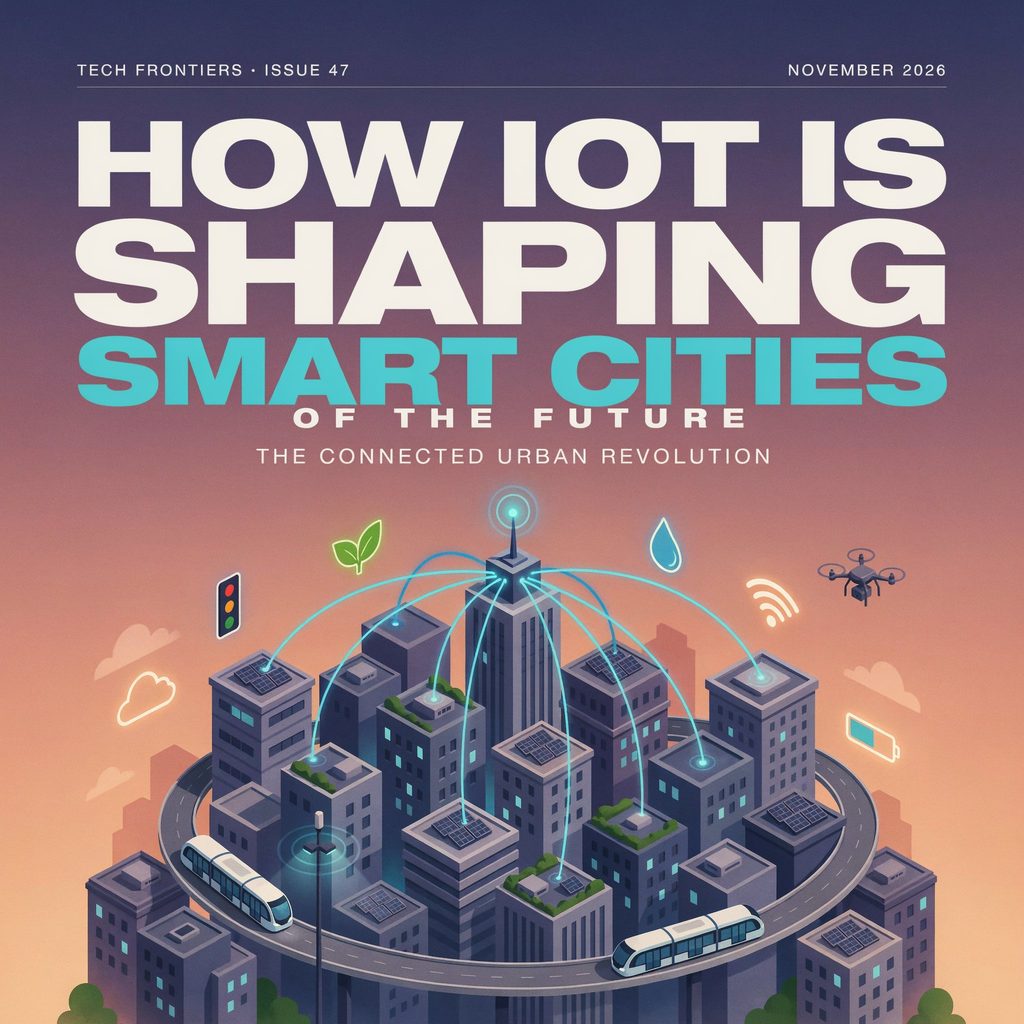
Enter the Internet of Things (IoT)—a vast network of connected devices, sensors, vehicles, buildings, and public infrastructure that collect and exchange real-time data to make cities more efficient, sustainable, safe, and livable. When embedded into urban planning and daily city operations, IoT transforms a traditional municipality into a responsive, adaptive organism.
How IoT Is Shaping Smart Cities of the Future is not a speculative question. It is happening now, in pilot programs and full-scale deployments across the United States and around the globe. This article explores the technologies, applications, benefits, and challenges defining this digital transformation—and what city planners, business leaders, real-estate professionals, and residents need to know.
What IoT Means in a Smart City
In simple terms, IoT refers to physical objects embedded with sensors, software, and wireless connectivity that allow them to send and receive data over the internet. In a smart-city context, those objects include traffic signals, parking meters, water pipes, streetlights, garbage trucks, building HVAC systems, air-quality monitors, and emergency vehicles.
Smart city technology layers these connected devices over existing connected infrastructure, creating a digital nervous system. Data flows from IoT sensors into centralized or distributed platforms, where data analytics and artificial intelligence turn raw readings into actionable insights. The result: decisions that once took weeks now happen in seconds.
The Technology Stack Powering Smart Cities
No single gadget makes a city smart. A coordinated stack of technologies works together:
- IoT sensors measure temperature, motion, pressure, flow, light, sound, and chemical composition.
- Wireless connectivity options—including 5G networks, LPWAN (Low-Power Wide-Area Networks), Wi-Fi, and Bluetooth—transmit sensor data.
- Cloud computing stores and processes massive datasets.
- Edge computing handles time-critical analysis locally, reducing latency for applications like adaptive traffic lights or emergency alerts.
- Artificial intelligence and machine learning identify patterns, predict failures, and automate responses.
Together, these components form the backbone of smart city infrastructure, enabling everything from smart traffic management to environmental monitoring.
Smart Traffic Management and Intelligent Transportation
Traffic congestion remains one of the most visible urban challenges. Intelligent transportation systems powered by IoT address it from multiple angles:
- Connected intersections use cameras, radar, and inductive-loop sensors to adjust signal timing in real time based on vehicle volume, pedestrian crossings, and emergency-vehicle priority.
- Smart parking sensors embedded in pavement or mounted on poles guide drivers to open spaces via mobile apps, reducing circling time and emissions.
- Public transportation agencies deploy GPS trackers on buses and trains, giving riders accurate arrival predictions and enabling dynamic route adjustments.
- Connected vehicles communicate with roadside infrastructure (vehicle-to-infrastructure, or V2I), receiving warnings about hazards, signal changes, or lane closures before a driver can see them.
Cities implementing these smart city solutions report measurable reductions in average commute times and intersection delays.
Smart Energy Grids and Sustainable Power
The smart grid represents one of the most consequential IoT applications in urban sustainability. Traditional electricity networks deliver power in one direction; smart grids use bidirectional communication to balance supply and demand dynamically.
- Smart meters installed in homes and businesses report consumption in real time, eliminating estimated billing and revealing usage patterns.
- Smart energy management platforms aggregate data from thousands of meters, allowing utilities to shift loads, reduce peak demand, and integrate renewable energy sources like rooftop solar and wind.
- Energy efficiency improves when algorithms detect anomalies—such as a transformer running hot—before they cause outages.
For city planners and utility executives, IoT-driven grids mean fewer brownouts, lower carbon footprints, and deferred capital expenditure on new power plants.
Smart Street Lighting
A single streetlight may seem minor; multiply it by hundreds of thousands, and the impact is significant. Smart streetlights equipped with motion sensors, ambient-light detectors, and networked controllers can:
- Dim when no pedestrians or vehicles are present.
- Brighten automatically during heavy traffic, inclement weather, or after sunset shifts.
- Report outages instantly, cutting maintenance response times.
- Serve as mounting points for air-quality sensors, Wi-Fi access points, or electric-vehicle chargers.
Cities that have upgraded to connected LED lighting report energy savings of 50 to 70 percent while improving nighttime visibility and public safety.
IoT-Enabled Waste Management
Garbage collection is logistically complex and fuel-intensive. Smart waste management changes the equation:
- Fill-level sensors inside dumpsters and public bins signal when containers are near capacity.
- Waste collection optimization software plots the most efficient pickup routes, skipping empty bins and avoiding redundant trips.
- Recycling monitoring tracks contamination rates and helps municipalities target education campaigns.
- Fewer truck miles translate directly into lower fuel consumption, reduced emissions, and decreased wear on vehicles.
The result is a cleaner environment and a lower operating budget for sanitation departments.
Smart Water Management
Water losses from aging pipes can exceed 20 percent in some U.S. cities. IoT offers precision tools:
- Water leak detection sensors identify pressure drops or acoustic anomalies, alerting crews before a small crack becomes a main break.
- Smart water meters give utilities and consumers granular usage data, encouraging conservation.
- Flood monitoring gauges in storm drains and rivers feed early-warning systems that trigger evacuations or infrastructure responses.
- Water quality monitoring probes continuously test for contaminants, pH changes, and turbidity.
- Irrigation automation in parks and public landscapes adjusts watering schedules based on soil moisture and weather forecasts.
These capabilities strengthen climate resilience and protect public health.
Public Safety and Emergency Response
IoT strengthens public safety by giving first responders and emergency managers richer situational awareness:
- Connected surveillance systems with analytics can flag unusual activity while respecting privacy guardrails.
- Emergency response coordination platforms integrate data from 911 calls, traffic cameras, weather stations, and social-media feeds to dispatch resources faster.
- Air quality sensors and environmental monitoring stations issue alerts during wildfires, industrial incidents, or extreme heat events.
- Disaster management planning benefits from predictive models that simulate flood paths, earthquake impacts, or hurricane trajectories using live sensor data.
Faster, data-informed responses save lives and reduce economic losses.
Smart Buildings and Connected Homes
Buildings account for roughly 40 percent of U.S. energy consumption. Smart buildings leverage building automation to cut that figure:
- Occupancy sensors adjust lighting, heating, and cooling room by room.
- HVAC automation responds to outdoor temperature, humidity, and internal load in real time.
- Predictive maintenance algorithms analyze vibration, temperature, and runtime data from elevators, chillers, and boilers, scheduling repairs before breakdowns occur.
- Building energy management systems aggregate utility data, benchmarking performance against peers.
For real-estate professionals, these systems lower operating costs, boost tenant satisfaction, and support sustainability certifications.
Healthcare and Accessibility Benefits
IoT’s urban impact extends into quality-of-life domains:
- Smart healthcare applications include remote patient monitoring devices that transmit vitals to clinicians, reducing unnecessary hospital visits.
- Connected emergency services use GPS and traffic data to route ambulances along the fastest corridors.
- Accessible public transportation equipped with real-time audio-visual announcements and app-based wayfinding supports riders with disabilities.
- Assistive urban technologies—smart crosswalks with extended timing, tactile navigation beacons, and connected benches—make public spaces more inclusive.
These applications reinforce digital inclusion and equitable access to city services.
Connectivity Infrastructure: The Backbone of Smart Cities
None of the above functions without robust communication layers:
- 5G networks deliver the ultra-low latency and high bandwidth needed for connected vehicles, HD video analytics, and massive sensor deployments.
- LPWAN technologies such as LoRaWAN and NB-IoT connect battery-powered sensors that transmit small data packets over long ranges—ideal for water meters, waste bins, and environmental probes.
- Wi-Fi and Bluetooth fill in-building and short-range gaps.
- Cloud computing platforms centralize storage and advanced analytics, while edge computing nodes handle latency-sensitive tasks at the curb or intersection.
- Interoperable data systems and open APIs prevent silos, ensuring that transportation, utilities, and public-safety platforms can share insights.
Investing in this smart city infrastructure is a prerequisite for any municipality pursuing a comprehensive digital transformation.
Key Benefits of IoT in Smart Cities
- Improved mobility through adaptive signals, real-time transit info, and smart parking.
- Lower energy use via smart grids, efficient lighting, and building automation.
- Reduced operating costs for utilities, sanitation, and facility management.
- Faster emergency response enabled by integrated sensor networks and predictive analytics.
- Cleaner environments thanks to optimized waste routes, reduced idling, and emission monitoring.
- Better public services delivered through data-driven decision-making and citizen engagement platforms.
- Improved quality of life as cities become safer, greener, and more responsive to resident needs.
Challenges Cities Must Solve Before Scaling IoT
Technology alone is not enough. Scaling IoT responsibly requires addressing structural and societal hurdles:
- Cybersecurity and IoT security: Every connected device is a potential entry point for attackers. Cities must enforce encryption, secure firmware updates, and network segmentation.
- Data privacy: Continuous sensor data collection raises legitimate concerns about surveillance and personal information misuse. Transparent data governance policies are essential.
- High implementation costs: Upfront capital for sensors, networks, and software can strain municipal budgets, especially in smaller cities.
- Digital inequality: Benefits must reach underserved neighborhoods, not just affluent districts. Digital inclusion strategies are critical.
- Outdated infrastructure: Aging pipes, roads, and electrical systems may need physical upgrades before sensors can be deployed effectively.
- Vendor lock-in: Proprietary platforms can trap cities in long-term contracts. Open standards mitigate this risk.
- Long-term maintenance: Sensors degrade, batteries die, and software requires patches. Budgeting for lifecycle management is non-negotiable.
Public trust hinges on transparent governance, clear data-use policies, and meaningful citizen engagement throughout planning and deployment.
Practical Recommendations for City Governments
- Start with pilot projects. Test IoT solutions in a defined corridor or neighborhood before citywide rollout.
- Set measurable goals. Define KPIs—traffic delay reduction, energy savings, leak-repair response times—so success is quantifiable.
- Build privacy-by-design policies. Embed data-protection safeguards into every project from day one.
- Prioritize interoperability. Adopt open data standards so future systems integrate seamlessly.
- Involve residents early. Host town halls, publish data dashboards, and create feedback channels to foster citizen engagement.
- Partner responsibly with technology providers. Negotiate contracts that include security commitments, data ownership clauses, and exit strategies.
Real-World Smart City Initiatives
Across the United States and internationally, connected-city programs illustrate what is possible:
- Intelligent transportation systems in cities like Los Angeles and Pittsburgh use adaptive signal control to reduce intersection delays by double-digit percentages.
- Smart utility networks in states such as Texas and California deploy millions of smart meters, giving consumers real-time usage data and enabling demand-response programs.
- Digital public services platforms allow residents to report potholes, request permits, and track service tickets through unified apps.
- Connected environmental-monitoring programs in coastal and wildfire-prone regions use sensor arrays to track air quality, water levels, and vegetation moisture, feeding early-warning systems.
- Smart streetlight conversions in multiple mid-size U.S. cities have delivered energy savings exceeding 60 percent while adding Wi-Fi and sensor capacity to existing poles.
These examples demonstrate that urban technology delivers tangible returns when paired with clear objectives and community buy-in.
FAQ: Smart Cities and IoT
1. What is IoT in a smart city?
IoT in a smart city refers to the network of sensors, devices, vehicles, and infrastructure that collect and share real-time data to optimize services such as transportation, energy, water, waste, and public safety.
2. How does IoT reduce traffic congestion?
IoT sensors and AI algorithms monitor vehicle flow and adjust traffic-signal timing dynamically. Smart parking guides drivers to open spots, and connected transit systems improve schedule reliability—all of which reduce idle time and bottlenecks.
3. Are smart cities safe from cyberattacks?
No city is immune, but robust cybersecurity practices—encryption, regular patching, network segmentation, and incident-response plans—significantly reduce risk. Security must be treated as an ongoing program, not a one-time setup.
4. How can IoT improve sustainability in cities?
IoT enables precise energy management, leak detection, optimized waste routes, renewable-energy integration, and environmental monitoring. Collectively, these applications lower emissions, conserve resources, and support urban sustainability goals.
5. What is the role of 5G in smart-city development?
5G networks provide the high bandwidth and ultra-low latency required for data-intensive applications like connected vehicles, real-time video analytics, and massive sensor deployments, making them a foundational layer of next-generation smart city infrastructure.
Conclusion: Building Resilient, Inclusive Cities with IoT
How IoT Is Shaping Smart Cities of the Future is ultimately a story about choices. The sensors, algorithms, and networks are tools; the outcomes depend on how thoughtfully cities deploy them. When guided by transparent governance, equitable access, and a genuine commitment to climate resilience and sustainable cities, IoT can help urban areas become more efficient, more responsive, and more humane.
The trajectory is clear: smart cities will not be optional luxuries but operational necessities as populations grow and climate pressures intensify. Cities that invest today in interoperable, privacy-respecting, and community-centered IoT ecosystems will be best positioned to deliver a high quality of life for every resident.
The future city is not just connected—it is conscious. And the Internet of Things is the nervous system making that consciousness possible.
Your Next Step
Whether you lead a municipal planning department, manage a commercial real-estate portfolio, run a utility, or simply care about the neighborhood you call home, now is the moment to ask: Where could connected technology make the biggest difference?
Audit your current operations. Identify one pain point—traffic delays, energy waste, slow maintenance response, water losses—and explore a pilot IoT solution. Engage residents and stakeholders early. Set measurable targets. Partner with technology providers who prioritize security, interoperability, and long-term support.
The smart city of the future is not built in a single leap. It is built one sensor, one data point, and one informed decision at a time. Start where you are, and build forward.